
Skylight dripping in winter? How to tell condensation from a real leak
A drip under a skylight in January is often water that formed on the glass, not water that came through the roof. From the floor they look the same. They are not the same repair, and the wrong one wastes a weekend with a tube of caulk.
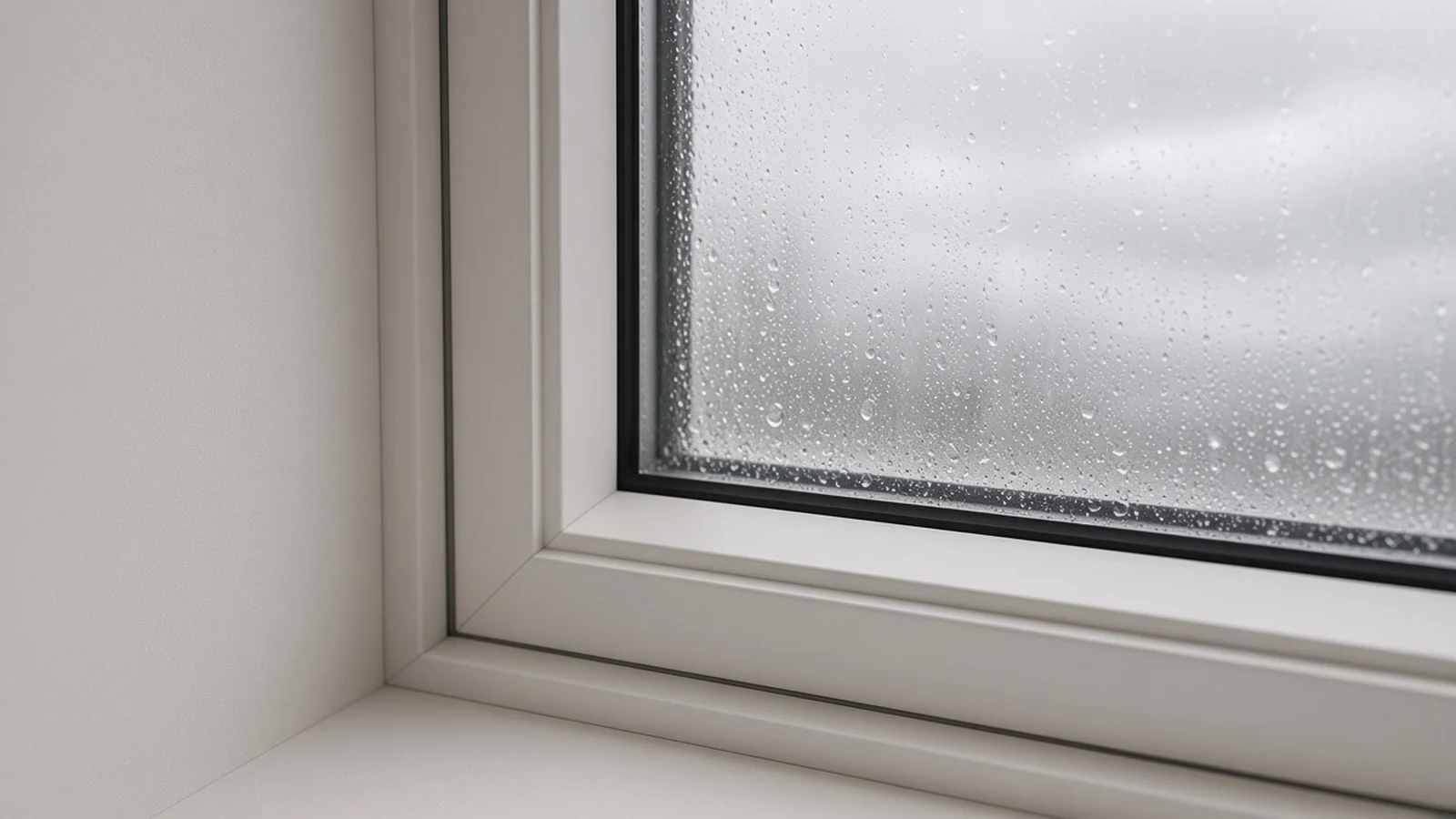
Condensation beads on the room side of the glass and runs to the frame. A leak comes from outside and shows up on the shaft, the drywall, or the wood around the curb. The photo below is that water on the glass: droplets in the corner of a white frame, on a grey day, with the shaft still dry.
Why a skylight sweats in a GTA winter
Indoor air holds moisture. When that air hits glass that the weather has made cold, the moisture drops out as water. In January a skylight is usually the coldest surface in the room, so it is where you notice it first. The same house can be fine in October and dripping by the first hard freeze, with nothing on the roof having changed.
- Indoor humidity. A house that feels comfortable in July is often too damp once the glass is below the dew point. Cooking, showers, a dryer vented into the room, plants, and a lot of people in a closed house all add water to the air. The furnace runs, the windows stay shut, and the moisture has nowhere to go except the coldest glass.
- Bathroom and kitchen moisture. Shower steam and a pot on the stove rise. If the skylight is over the stair, the bath, or the kitchen, that air arrives at the glass first. You will often see it after the morning showers, then watch it ease once the room warms.
- Poor ventilation. A bathroom fan that is too small, a fan nobody runs, or a fan that dumps into the attic instead of outdoors leaves the moisture in the house. The same wet air shows up as frost on attic nails once the weather is cold. That attic side of the job is in prepare your GTA roof for winter.
Condensation has a pattern. It shows up on cold mornings and eases when the sun hits the glass or the room warms up. The water is on the room side of the pane, or sitting in the gutter of the sash, and the drywall down the shaft stays dry. Often a cold window in the same room is wet too. Wipe the glass. If it comes back with no rain, and the shaft is still clean, you are looking at the air in the house.
How a real leak is different
A leak does not care how steamy the bathroom was. Water is getting past the roof, and it keeps coming in weather that has nothing to do with cooking dinner.
- Failed flashing. Skylights rarely fail through the middle of the glass. They leak at the metal around the curb. From the ground, look for flashing that is lifted at a corner, rusted, or smeared with roofing tar. Tar over flashing is a patch, not a seal, and freeze–thaw opens it. Water usually gets in on the uphill side and travels before it shows up on the ceiling, so the drip is not always directly under the gap.
- A broken glass seal. The seal between the glass and the sash can fail. You will see fog or droplets between the panes, or water that gets past a sash that no longer sits flat. That keeps happening in a rain that has nothing to do with indoor humidity, and wiping the room side of the glass does not stop it.
- Ice dams. Meltwater refreezes at the cold eave, backs up under the shingles, and can find a skylight curb that was fine in October. If the same eave grows a ridge of ice every winter, and the drip shows up when that ice thaws, the dam is part of the problem. Chipping the ice off is not the repair. The airflow in the attic is, and so is the flashing the water sat against.
A leak leaves evidence the condensation does not. A tea-coloured stain, soft drywall, or paint that has bubbled on the shaft means water has already been through. So does wet wood around the curb, if you can see it from the attic hatch without walking out onto the ceiling joists. It shows up during rain or a thaw, including when the kitchen is cold and nobody has showered. One skylight drips. The other windows in the room stay dry.
If water is already coming through the ceiling, stop the detective work and follow what to do when a roof is leaking. The first hour is about the ceiling and the photos.
| What you see | What it usually is |
|---|---|
| Beads on the glass on a cold morning, shaft dry, other windows wet too | Condensation. The air in the house is wetter than the glass can take. |
| The same drip during a rain or a thaw, whether or not anyone has showered | Water from outside. Flashing, a failed seal, or an ice dam. |
| A brown stain, soft drywall, or paint bubbling on the shaft | Water has already been through. That is a leak, not a wipe-down. |
| Fog or droplets between the panes, or a sash that will not latch | The glass seal or the frame. That unit wants replacing, not caulk. |
| Ice along the eave, and a drip at the skylight when it thaws | An ice dam backing up. The attic and the flashing both need a look. |
What the pattern usually means on GTA houses we see in winter. A visit is what tells you which row you are actually in.
What you can do yourself
If the shaft is dry and the water is on the glass, start with the air. None of this is a roof repair, and none of it belongs up on the slope. Leave the roof to someone set up to be on it.
- Run the exhaust fans. Bathroom and kitchen fans have to vent outdoors, not into the attic, and they need to run long enough to clear the steam, not just for the length of the shower. A fan that is noisy and barely moves air is not doing the job. If you can feel it dumping into the attic, that is a duct problem, not a skylight problem.
- Lower the humidity. A small hygrometer on the kitchen counter is enough to see the pattern. Lids on pots, a shorter shower with the door shut and the fan on, and laundry dried somewhere the moisture can leave the house. If the skylight is sweating, the house is wetter than that glass can handle. Watch whether the beads come back the next cold morning.
- Open a venting VELUX, briefly. Warm, wet air leaves at the ceiling, which is the point of a unit that opens. Crack it while someone is home, let the room change air, then close it and latch it before you leave and before a freeze. A venting skylight left on a crack is a hole in the air seal and a way in for weather, not a fix. Whether an opening unit was the right choice for that room is a different question. We covered venting versus fixed skylights on its own.
Wipe the glass and the sash so standing water is not sitting in the frame. That does not repair a leak. It tells you whether the water comes back with no rain. Do not smear caulk or roofing tar over the frame to get through the season. That traps water and makes the next flashing job harder.
When to call Well Roofing
Call when the shaft is stained, the sash will not latch, water is between the panes, the flashing is lifted or tarred, or you have dried the glass and the drip still comes with the rain. Those are not humidity problems, and a winter of wiping the pane will not close them.
An inspection is how you tell which job it is. Reflashing is the repair when the curb and the metal are the problem and the unit itself is still sound. Replacement is the job when the glass seal has failed, the frame is cracked, or the unit is old enough that a new flashing kit will not sit on it. The scope of that work, from the curb to the finished shaft, is on our skylight installation page.
Well Roofing is based at 17 Peterlee Avenue, Etobicoke, and we come to the house — Toronto, Mississauga, Vaughan, and the rest of the GTA.
Book a free assessment and we will tell you whether you are looking at humidity, a flashing job, or a unit that needs replacing. Or call (416) 999-9706.