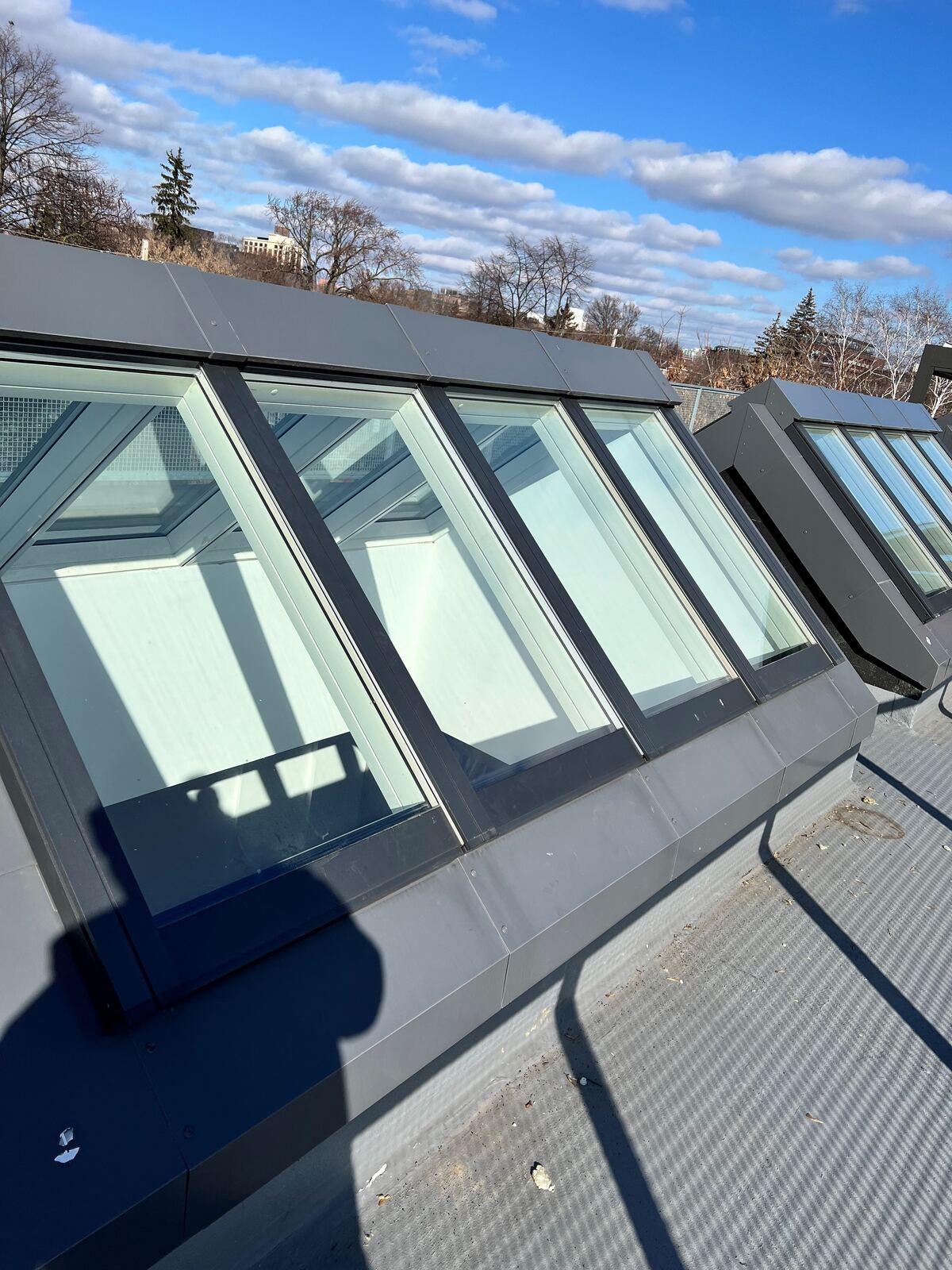
VELUX certified skylight installation, roof replacement, and repair across the old city — from the flat roofs of Leslieville and Riverdale to the Victorian semis of Cabbagetown and the Annex.
Most of what makes a Toronto roof difficult has nothing to do with the roofing itself. It is the age of the framing, the pitch, and the fact that there is often no way to get a ladder around the side of the house.
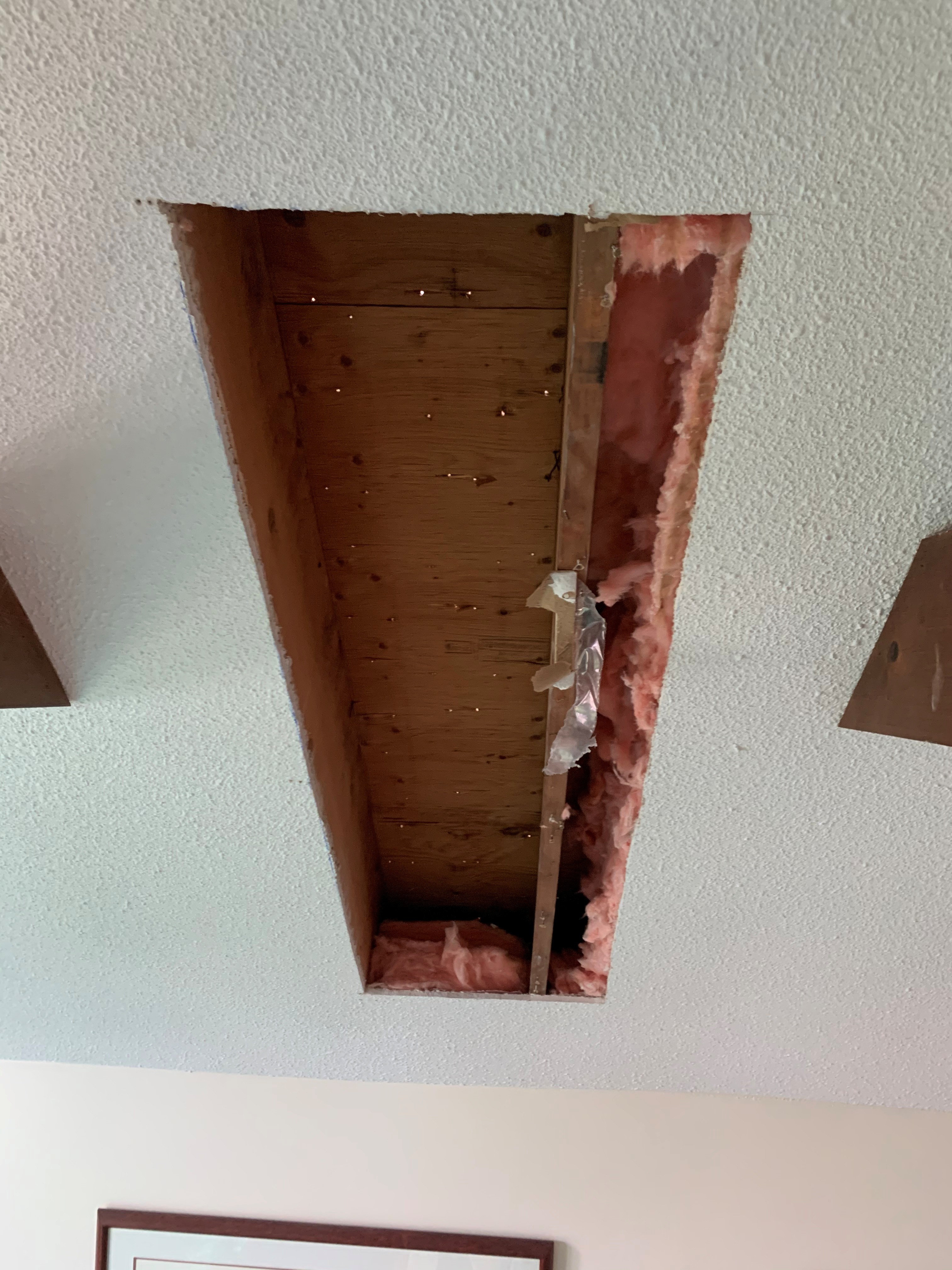
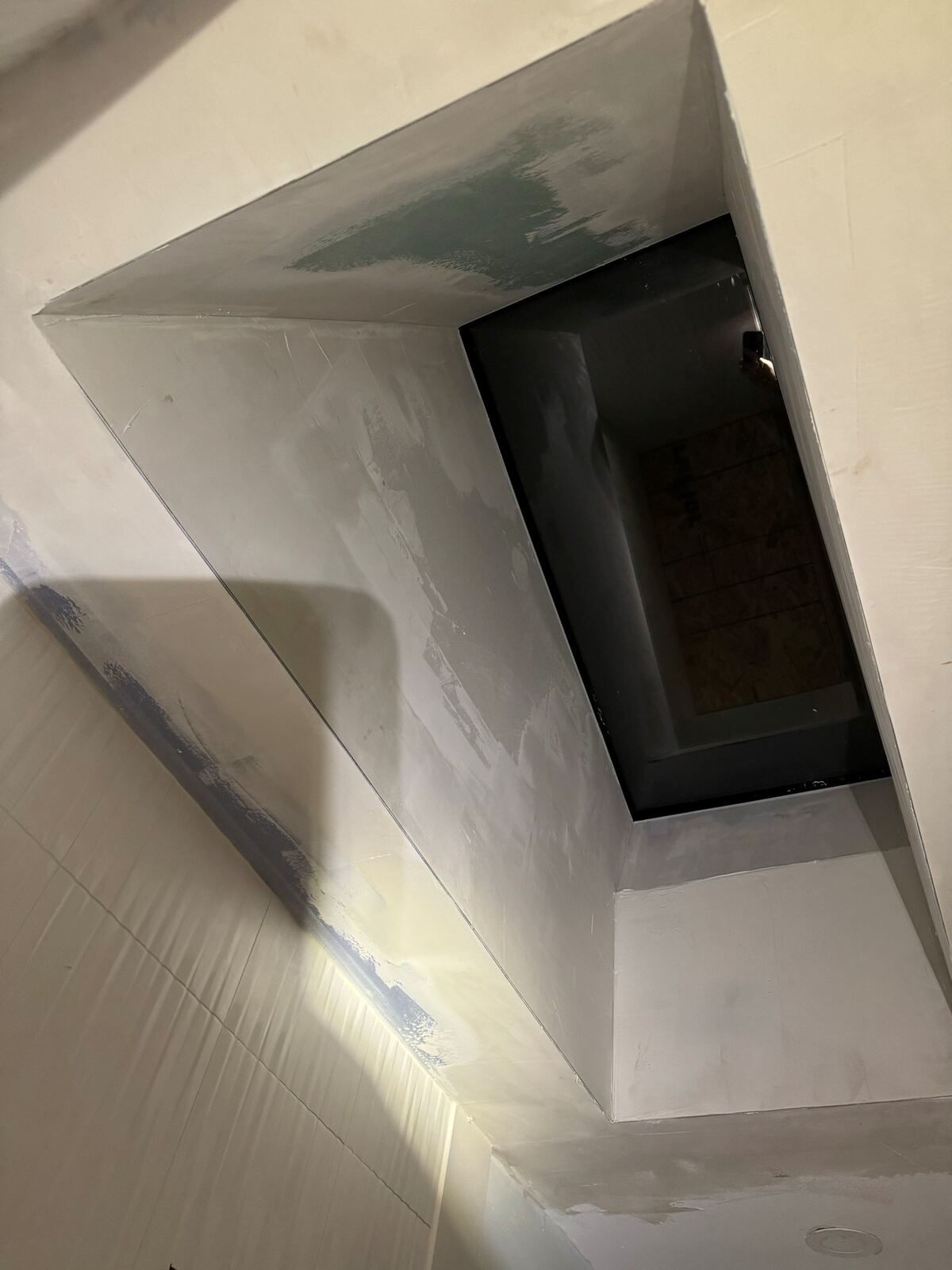
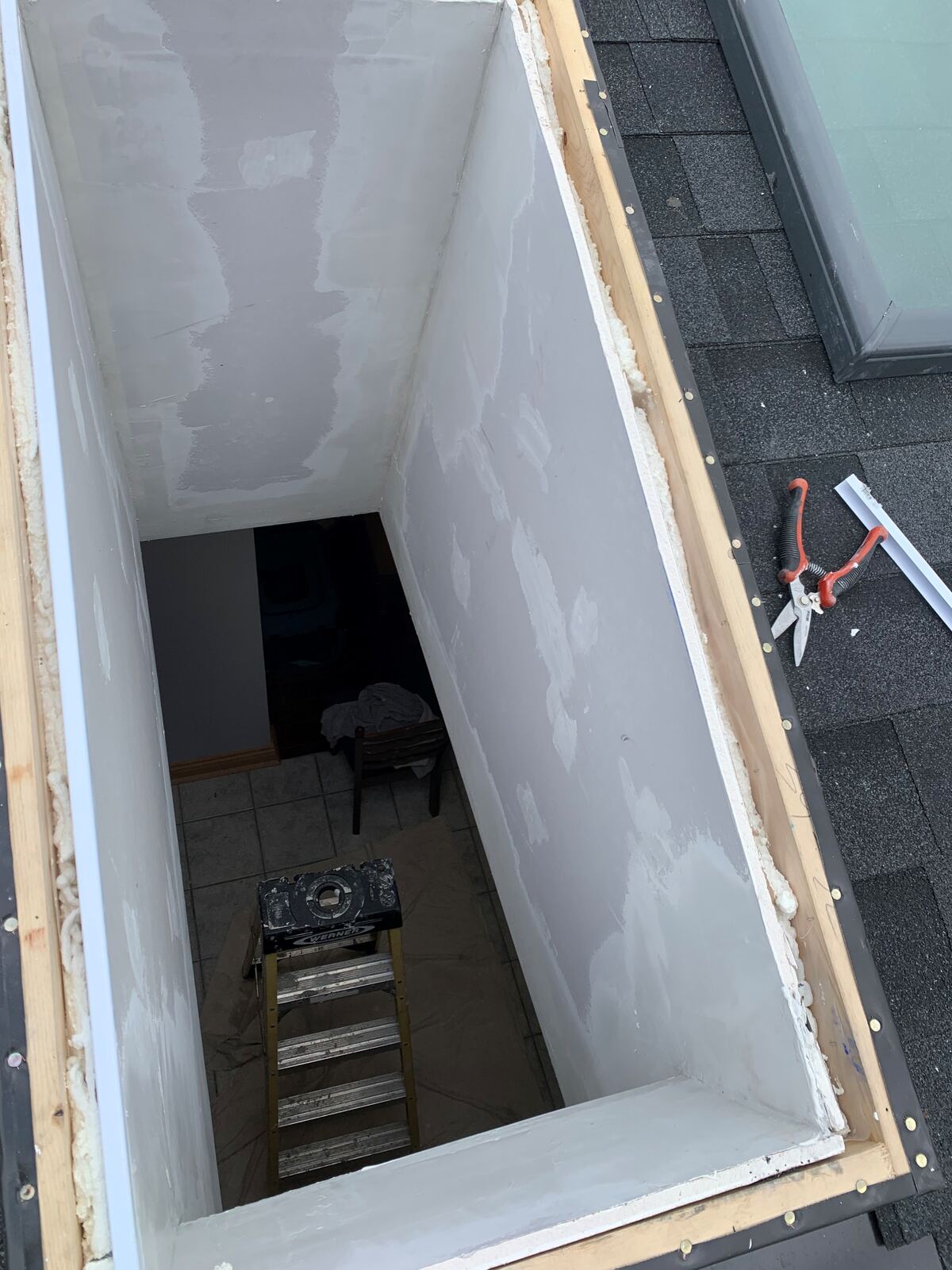
Cabbagetown, Riverdale, the Annex, Parkdale and Little Italy are full of 1890s–1920s semis and row houses. The framing is true-dimension lumber on irregular spacing, so nothing about a skylight curb here comes off a shelf. These interiors are deep and narrow with windows only at the front and back — which is exactly why a skylight over a stairwell or bathroom changes this kind of house more than any other we work on.
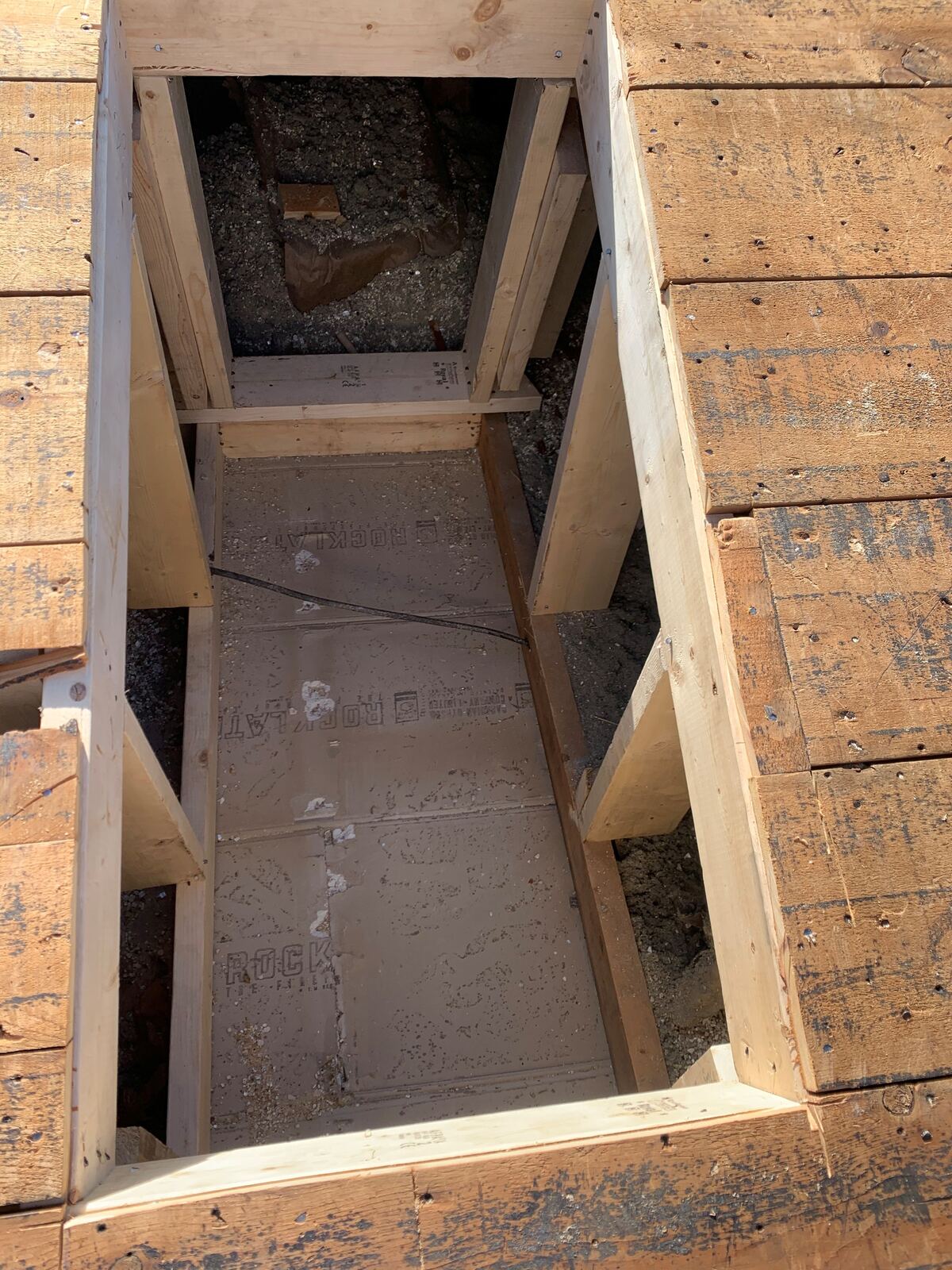
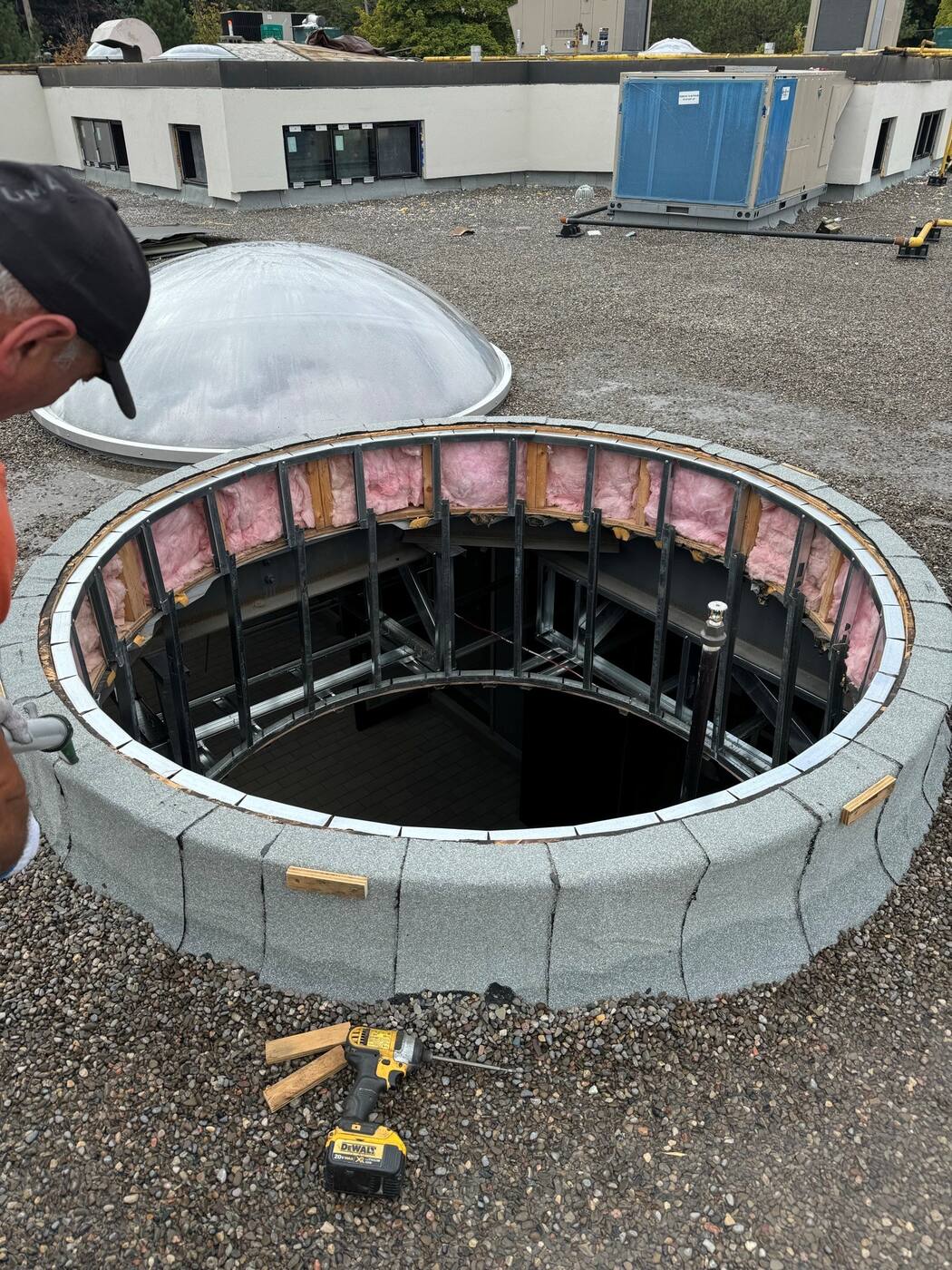
A large share of the old city carries flat or near-flat roofs, usually modified bitumen laid over an original tar-and-gravel build-up. A skylight on a flat roof is a different job entirely: the unit sits on a built curb raised above the membrane, and it is the waterproofing rather than the glass that determines whether it ever leaks. This is the same detailing as our commercial work, at house scale.
On a sixteen-foot downtown lot there is frequently no side yard, no driveway, and no way to move material to the rear roof except through the house or off the laneway. We work out access before we quote, because a job needing a laneway approach or a lift is a different price than one where the truck parks out front.
Toronto is its own permit authority, and its skylight rule is more generous than most homeowners are told.
Plenty of Toronto homeowners are quoted for permit drawings and engineering they may not need. Plenty of others get an opening cut with no permit when the job clearly required one. Both are expensive mistakes, in different directions. We work out which side of the one-rafter line your job falls on at the site visit, and we tell you straight.
Heritage status is worth checking yourself as well. The City's Heritage Register map will tell you whether your property is listed or sits inside a Conservation District, and that answer moves your timeline far more than anything about the roof does. Confirm current requirements with Toronto Building through 311.
Book a free assessment →Every photo below is our own crew on a GTA roof. No stock imagery, no manufacturer renders.
Type your Toronto address, see the house on satellite, trace the roof outline, and pick materials and VELUX skylights. The tool measures the real area and shows a ballpark range on the spot — useful on downtown lots where nobody can eyeball a roof from the street.
Customize Your Roof
Often not. The City exempts installing a skylight in an existing house or small building of three storeys or less, provided the installation does not remove more than one rafter or joist. A single unit set between existing rafters commonly qualifies. Anything wider, anything removing a second rafter, and anything touching a truss is structural work that needs a permit and an engineered header. We tell you which one you have before you commit.
Yes, and it is a large part of what we do downtown. The unit is mounted on a curb built up above the membrane rather than sitting in the roof plane, and the membrane is then dressed up and over the curb so water never reaches a joint. Flat-roof skylights fail when the waterproofing is treated as an afterthought, which is why we build the curb ourselves rather than leaving it to someone else.
Usually, yes. The question is visibility. Work on a rear slope that cannot be seen from the street is far simpler than anything on a front elevation. In an HCD, Heritage Planning reviews the exterior work through your Toronto Building application, so it is not a separate race — but it does add review time, and it is worth confirming your property's status on the City's Heritage Register before you plan around a date.
No, but it needs to be priced honestly. We look at how material gets up and debris gets down before quoting — through the house, off a laneway, or by lift. What we will not do is quote as though access is easy and then raise the price once we are on site.
It changes where we can work, not whether we can. The party wall and the junction where the two roofs meet is the most leak-prone detail on a Toronto semi, and it needs proper flashing regardless of the skylight. We keep the opening clear of that junction and tell you if the shared detail needs attention while we are up there.
Cabbagetown, Riverdale, Leslieville, The Annex, Little Italy, Parkdale, Roncesvalles, The Beaches, Danforth, High Park, Bloor West Village, Trinity Bellwoods, Rosedale, Forest Hill, Davisville, Leaside, Yonge & Eglinton, Junction Triangle, Corktown, St. Clair West
On-site look, written quote, no pressure — and a straight answer about whether you need a permit.