Venting vs fixed skylights: which one should you install?
Almost every skylight conversation we have in the GTA reaches the same fork in the road: do you want one that opens, or one that doesn't? A fixed skylight is a sealed window in your roof — light only. A venting skylight (VELUX calls them "Fresh Air" skylights) opens on a hinge to let hot, damp air out. On the unit alone the difference is about $460 for a small manual venting model and up to $2,600 for a large solar one — VELUX 2026 list, and it's worth thinking about before the crew shows up, because the two units are not interchangeable once the curb is built.
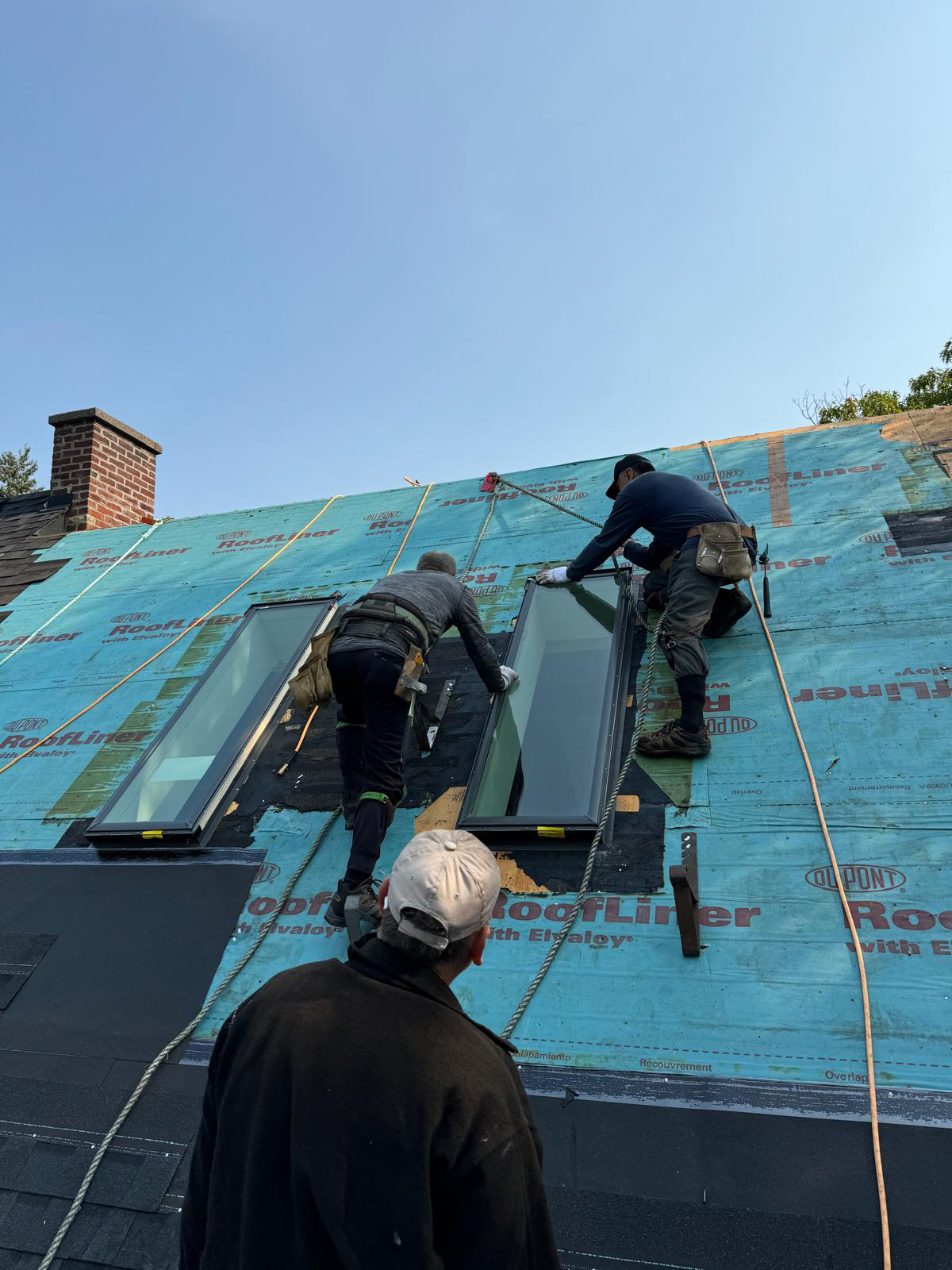
What a venting skylight actually does
Warm air rises. In a two-storey GTA home in July, the hottest air in the house collects at the ceiling of the top floor and stays there — which is why upstairs bathrooms feel like a sauna and finished attics are unusable by mid-afternoon. An opening skylight gives that air an exit at the highest point of the room. Cool air gets pulled in through a window or door lower down, and you get a slow, quiet air change without touching the thermostat. Contractors call it the stack effect; homeowners just notice the room stops feeling stuffy.
It also moves moisture. Shower steam, cooking humidity and the damp that comes off a bathroom floor all rise. Venting them straight out through the roof is far more direct than pushing them sideways through a duct.
The three ways they open
- Manual. You crank it open, or use a telescoping rod for out-of-reach installs. Cheapest, nothing to fail, no wiring. Fine if the skylight is over a stairwell you walk past every day; annoying if it's 14 feet up over a great room.
- Electric. Opens by remote or wall switch, wired back to a control unit. Best when you're already opening the ceiling and can run cable easily.
- Solar-powered. A small integrated panel charges a concealed battery, so there's no wiring at all — it works off available daylight, not direct sun. This is the one we install most often in retrofits, because it turns a "we'd have to open the drywall to run power" problem into a normal skylight job.
The rain sensor question
The first thing people ask is what happens when it rains while they're at work. Every VELUX Fresh Air skylight ships with a rain sensor built in. It's piezoelectric — it reacts to the sound and impact of the first drops and drives the skylight shut on its own. On solar-powered units the battery keeps that working through a storm-related power outage, which is exactly when you'd want it to. It is not a reason to leave the house with the skylight wide open in a thunderstorm warning, but in normal use it does its job without you thinking about it.
When we'd tell you to buy fixed instead
Venting isn't automatically the better choice. Fixed units make more sense when:
- The room already has good mechanical ventilation. If the bathroom fan is properly sized and vented outside, you're paying extra for a function you have.
- You want maximum glass for the money. The same budget buys a noticeably larger fixed unit — often the better call in a kitchen or living room where daylight, not airflow, is the point.
- Nobody will ever operate it. A manual venting skylight above an unreachable ceiling with no rod becomes a fixed skylight that cost more.
- It's a low-slope or flat roof. Opening units need pitch to drain and hinge properly. On flat commercial roofs we handle ventilation differently — usually through the modular skylight system itself. That's covered on our commercial skylights page.
A note on Ontario code
People sometimes ask whether a venting skylight satisfies the bathroom ventilation requirement in the Ontario Building Code so they can skip the exhaust fan. Treat that as a no. The code path for bathrooms in new work is generally mechanical exhaust, and municipal requirements vary across the GTA. Plan the skylight as a comfort and daylight upgrade, and confirm the ventilation requirement with your local building department or designer before you delete a fan from the drawings.
What it costs, honestly
| Unit type | Our unit price |
|---|---|
| Fixed skylight — FS deck mounted | $469 – $1,035 |
| Fixed skylight — FCM curb mounted | $285 – $1,446 |
| Manual venting skylight — VS / VCM | $851 – $1,870 |
| Solar or electric venting — VSS / VSE / VCS / VCE | $1,738 – $3,609 |
| Flashing (required for the warranty) | $138 – $272 |
Our prices for the unit, at VELUX 2026 list — installation is quoted separately after a site visit. Every size and glass option is in our skylight price guide.
One caution for Canadian readers: most of the solar skylight marketing you'll find online quotes a 30% US federal solar tax credit. That's a US program — it does not apply here, and any GTA contractor who tells you otherwise is guessing. Price the unit on its merits.
Getting the install right matters more than the model
Whichever you choose, the leak risk lives in the flashing, not the glass. A deck-mounted VELUX unit is designed around three layers — the foam-lined deck seal, adhesive underlayment, then the flashing kit matched to your roofing material — and the 10-year no-leak installation warranty depends on all three being installed the way the manufacturer specifies. A venting unit adds a moving sash and a seal that has to stay compressed for twenty years, so it is even less forgiving of an improvised flashing job.
Not sure which fits your roof?
Tell us the room and we'll tell you straight whether the venting model earns its price there. Try the Customize Your Roof tool for an instant ballpark, or book a free on-site assessment — we check the pitch, the curb and the reach, and send a written, itemized quote within 48 hours.