
Cedar shake roofs: why they turn grey, and what to check before winter
October and November are when you can still see a cedar shake roof. Snow covers the valleys, and a slope that looked ordinary in September can be the one that leaks in January. The useful check is from the ground, before a hard freeze, and it is about the wood — not about whether the roof is still brown.
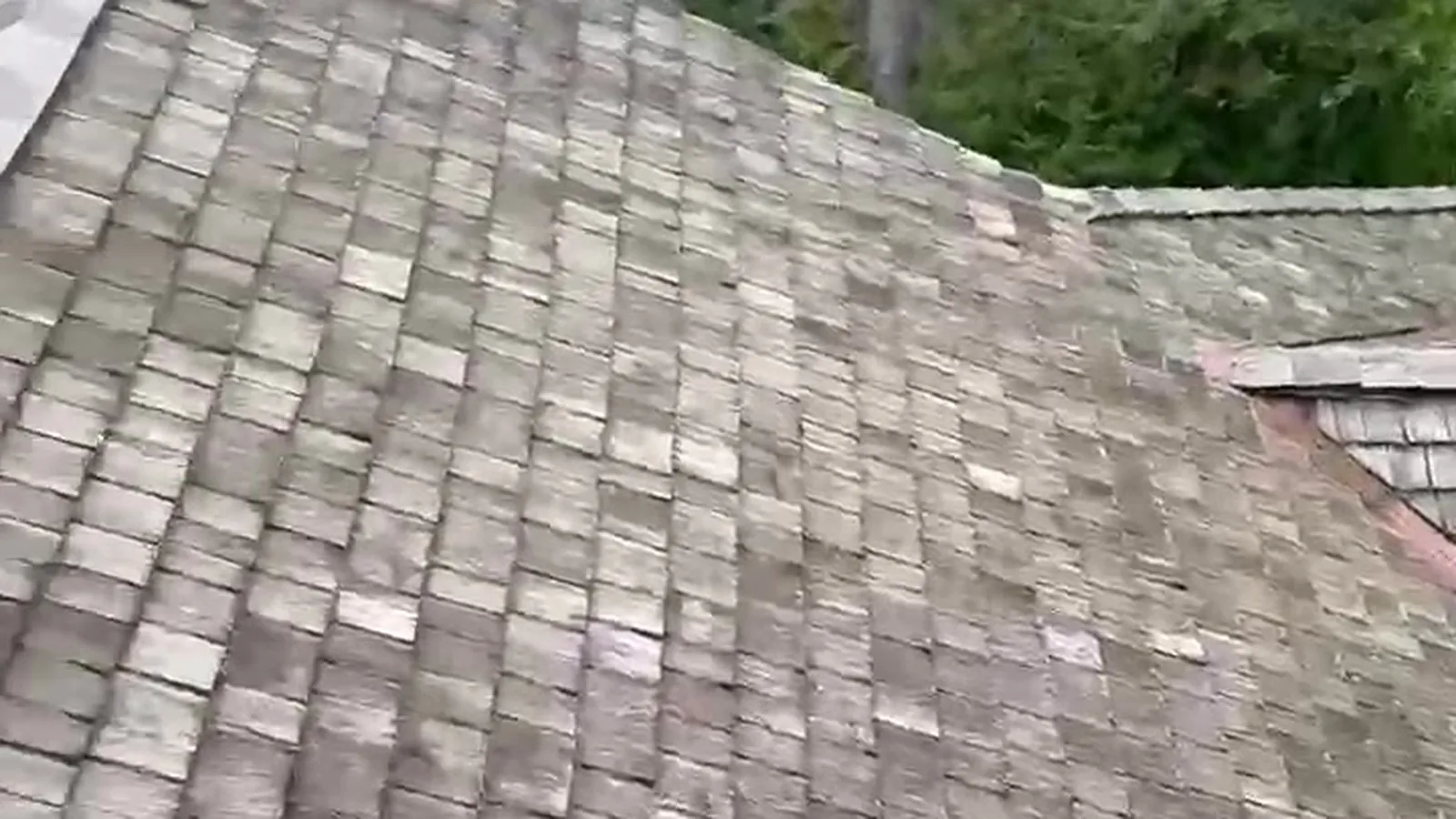
Grey is what cedar does
A cedar shake roof turns grey. That is what the wood does outside. Sun and rain bleach the surface, and a slope that started the colour of fresh cedar spends most of its life silver-grey, sometimes with brown streaks where the weather has not finished with it. A slope in the sun greys sooner than one under trees. Two sides of the same house can look like different roofs, and both can be sound. Grey is normal weathering, not damage.
If the shakes are lying flat, lapped over the course below, and the valleys are shedding water, the colour can wait.
The photo above is from a cedar shake roof we were on. The field of the slope has gone grey. The ridge is the line up the left, and the valley on the right is where the shakes are worn. That difference — even colour in the field, tired wood where the water concentrates — is the whole point of the look.
Valleys, ridges, and flashing take the wear
Water on a shake roof runs downhill until something stops it or two slopes meet. A valley is where two slopes dump into one line, so that line carries more water than any other course, and it is where needles, leaves, and grit off the wood come to rest. A valley that holds debris holds water against the shakes. Over the years the ends of the shakes in that line wear thin, break, or sit up. From the sidewalk that often reads as a darker, rougher line where the planes meet, sometimes with debris still sitting in it.
The ridge is the other place the weather works hardest. It takes the wind, and the cap shakes are the ones a gust can lift. Look along the ridge from the street, not straight at it. Caps that are split, missing, or sitting proud of the line show up edge-on. A ridge that looks even from the front door can be open when you see it that way.
Flashing is where the wood stops and metal has to carry the water: a chimney, a sidewall, a skylight, a plumbing vent. The joint moves, and ice works it every winter. A smear of roofing tar over the metal is a patch rather than a seal. The ground-level look at that metal is in prepare your GTA roof for winter.
What you can spot from the ground this fall
You do not need to be on the roof to see the things that matter before winter. Leave the walking to someone set up for a shake roof. A boot splits a cedar shake that an asphalt shingle would have shrugged off. Use the sidewalk, a back window, and binoculars if you have them.
- Split shakes. A crack that runs with the grain, open enough that you can see a shadow in it. One split on a large slope is a repair. A slope covered in them is wood that is breaking up, and replacing it shake by shake does not put the roof back together.
- Cupped shakes. The edges turn up, or the middle dishes in, so the piece no longer lies flat on the one below it. Wind-driven rain and meltwater get under a cup. From the ground a cupped course looks rippled. A sound course looks like even, overlapping rows.
- Missing shakes. A gap in the row, or a shake that has slid and is sitting proud of its neighbours. Snow hides the gap. The next thaw finds it.
- Mossy shakes. Moss is a mat, usually on the shaded slope and down in the valley, and it holds water against the shakes long after the rain has stopped. A green or brown carpet in the valley is worth dealing with while you can still see it, before a freeze locks it in place.
- A worn valley. Look along the line where the slopes meet, not only at the middle of the field. Shakes worn short, broken at the ends, or packed with needles and leaves are the valley showing the work it does. Photograph that line. Water concentrates there, and snow covers it first.
If water is already coming through a ceiling, leave the ground check and follow what to do when a roof is leaking. Deal with the ceiling, and photograph it, before you go back to the shakes.
If shakes are torn off, or a branch is on the slope, that is storm damage rather than wear that took years. Photograph the slope before anyone tidies it, then read how Ontario storm-damage claims work.
Why a fall check beats a January leak
A small gap is a different problem in January than it is in October. Water sits in a split, under a cupped edge, or behind a dam of needles in the valley. It freezes, the ice widens the opening, and the melt after that has a path that was not there in September. Then the snow covers the wood, and the first sign inside the house is a stain.
A look now still shows the shakes. You can see the splits, the cups, the missing pieces, and whether the valley is packed, and you can photograph them while they are visible. That is the difference between a repair you chose and a leak you found in a cold week.
Gutters, attic ventilation and skylights are the same job on a shake roof as on any other. That list is prepare your GTA roof for winter. On cedar, add the wood itself, and look hardest at the valley, the ridge and the flashing.
Widespread cups and splits are a different conversation from one loose shake. The signs an asphalt roof needs replacing, granules in the gutter and curling tabs, describe a different material. Cedar does not shed granules. If the wood is breaking up across a slope, the next step is an assessment of this roof, not that checklist.
| What you see from the ground | What to do before winter |
|---|---|
| Even grey, shakes lying flat | Leave the colour. |
| One split, or one missing shake | A repair, while you can still see the spot |
| Cups or splits across a slope | The wood is breaking up. Get it assessed. |
| Moss, needles, or leaves packed in the valley | The valley is holding water. It needs a look before it freezes in place. |
| Ridge caps sitting up, or flashing lifted or tarred | That joint will work all winter. Have it checked. |
What a ground-level look can and cannot settle on a cedar shake roof. The visit is what prices the row you are in.
When to book a roof check
Book before the snow if you can see splits, cupped or missing shakes, moss in a valley, a ridge cap sitting up, or flashing that is lifted or tarred. Book also if you cannot tell a sound roof from one that is finished.
Well Roofing is based at 17 Peterlee Avenue in Etobicoke. We come to houses in Toronto, Mississauga, Vaughan, and the rest of the GTA.
Book a roof check and we will tell you what the fall look turned up, and whether this roof can wait. Or call (416) 999-9706.