How much attic insulation do you need in the GTA? (2026 guide)
Most GTA homeowners think of attic insulation as an HVAC question — a way to shave a few dollars off the winter gas bill. It's actually a roofing question first. Thin or uneven insulation is one of the top causes of ice dams, premature shingle wear, and mysterious ceiling stains we get called out for every winter. Here's what the code actually asks for, what most existing homes have, and how to tell if your attic is working against your roof.
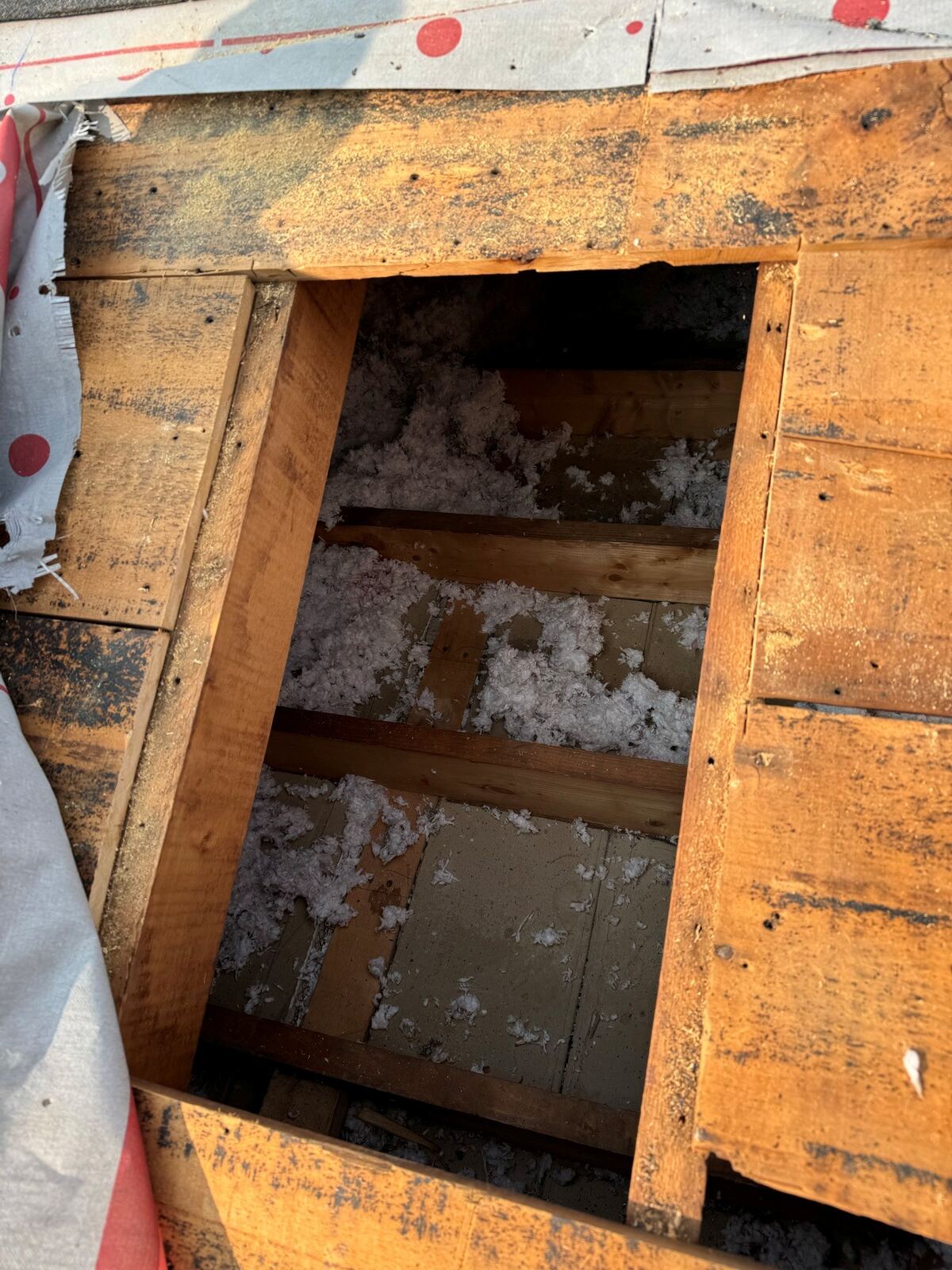
The short answer
The Ontario Building Code sets a target of roughly R-60 effective thermal resistance for attic and ceiling assemblies in new construction — about 18–24 inches of blown-in fibreglass or cellulose, depending on the product. Homes built before the early 2010s were typically insulated to R-20 to R-40, and older 1960s–1980s housing stock across Toronto, Mississauga, and Durham often sits well below that once insulation has settled and compacted over the decades.
| Home age (typical GTA) | Insulation usually found | Gap to current R-60 target |
|---|---|---|
| Pre-1980 | R-12 – R-20 (often uneven, settled) | Large |
| 1980s – 1990s | R-20 – R-30 | Moderate |
| 2000s – 2011 | R-31 – R-40 | Small – moderate |
| 2012 – present (new builds) | R-50 – R-60 | Meets or close to target |
The R-60 figure is a new-construction code target, not a legal requirement to retrofit an existing home — but it's the benchmark we measure existing attics against when a homeowner asks "is this enough?"
Why this is a roofing problem, not just an energy bill
An attic that's too warm in winter melts the underside of the snowpack on your roof. That meltwater runs down to the cold overhang past your exterior walls and refreezes right at the eave — building the classic ice dam that backs water up under your shingles. We see the same pattern on almost every GTA ice-dam call: thin or gappy insulation, warm air leaking up from pot lights and bath fans, and not enough insulation to keep the roof deck cold. Fix the insulation and air sealing, and the ice dam problem usually goes away on its own — no amount of chipping ice off the roof each January solves the root cause.
Insulation needs ventilation to work
Insulation alone isn't the whole fix. A healthy attic also needs continuous airflow from the soffits at the eaves up to a ridge or roof vents at the peak, so any heat and moisture that does get through is carried outside before it can warm the roof deck or condense as frost on the underside of the sheathing. We regularly find insulation that's been pushed against the soffits, blocking intake airflow entirely — a five-minute fix (baffles) that makes a real difference. When we're up on a roof for a repair or replacement, checking soffit-to-ridge airflow is part of the inspection, because insulation and ventilation only work as a pair.
Signs your attic needs attention
- Icicles and ice dams at the eaves most winters, especially if neighbours with similar roofs don't have the same problem.
- Uneven snow melt on the roof — bare patches or fast-melting stripes usually trace back to heat escaping unevenly below (often above a stairwell, bathroom fan, or attic hatch).
- A cold house that still runs a high heating bill, or rooms directly under the attic that are noticeably colder or hotter than the rest of the house.
- Visible daylight or gaps around the attic hatch, pot lights, or where insulation has settled and left bare spots on the joists.
- An attic you can stand up in comfortably at the edges — if you can easily see the tops of the ceiling joists rather than insulation mounded well above them, you're short of current targets.
What it typically costs
Topping up an existing attic with blown-in insulation is one of the more affordable improvements a GTA homeowner can make — most jobs run a few hundred to just over a thousand dollars for an average bungalow or two-storey attic, depending on square footage and how much insulation is already there. It's also one of the best times to combine work: if we're already up on your roof for a repair, a new skylight opening, or a full replacement, topping up attic insulation and adding baffles is far cheaper done at the same time than as a separate visit.
Skylights and insulation work together
If you're planning a skylight, the shaft between the roof opening and your ceiling needs to be insulated and air-sealed just as carefully as the rest of the attic — an under-insulated skylight shaft is a common spot for condensation and heat loss. When we install or replace a skylight, we insulate and seal the shaft properly as part of the job, not as an afterthought. See our skylight installation page for how that fits together, or try the Customize Your Roof tool for an instant estimate that accounts for your roof's size and pitch.
Get your attic assessed
A quick attic inspection tells you your current R-value, whether ventilation is blocked, and whether ice damming risk is coming from insulation, air leaks, or both. Book a free assessment and we'll give you a straight answer — and a written quote if a top-up makes sense before winter.